 Posted by
 If you want to learn how to make Natto from mint, this is exactly the site you are looking for.
I told you the way to make Natto, fermented soybeans, from rice straw, but if you can’t get hold of rice straw, what can you do? Rice isn’t grown everywhere, and even if it is in your area, you still have to ask farmers to give straws to you, which can be troublesome.
What if you can obtain Natto germs from mint which is grown in your garden? Mint is grown everywhere and it is easy to grow it in your garden, too.
Well, it is possible, and I am going to tell you how today. So stick around.

My name is Sachiaki Takamiya and I am the author of IKIGAI DIET: The Secret of Japanese Diet to Health and Longevity. I wrote this book based on the diet and the lifestyle of young naturally conscious Japanese people because I think they are the healthiest people in the country with the longest life expectancy: They are the latest successors of Japanese natural medicine and philosophies, where many of the health related practices such as the macrobiotic diet, Shiatsu, and Aikodo are all based on.
I also live in Satoyama near Like Biwa where fermentation is practiced regularly.
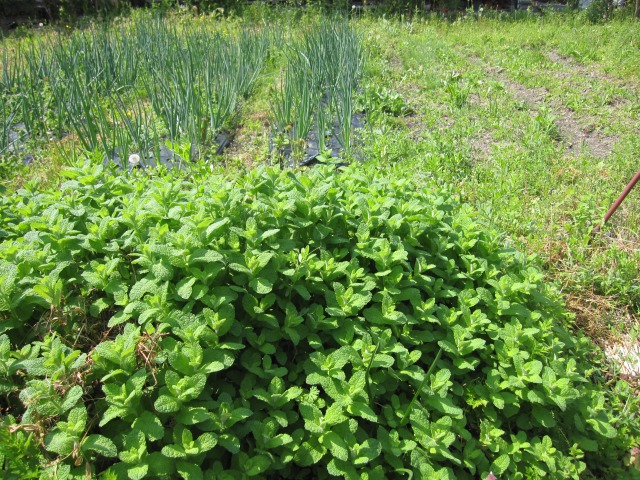
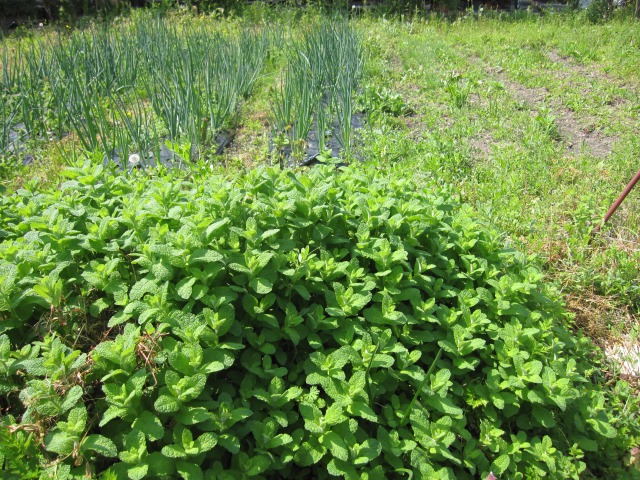
Apparently, Natto germs are found in most wild plants, not only rice. This means you can extract Natto germs from wheat, mint, or any other plants. In my garden, there happened to be a lot of mint; this is wild mint, I am not growing it. So I decided to give it a try.
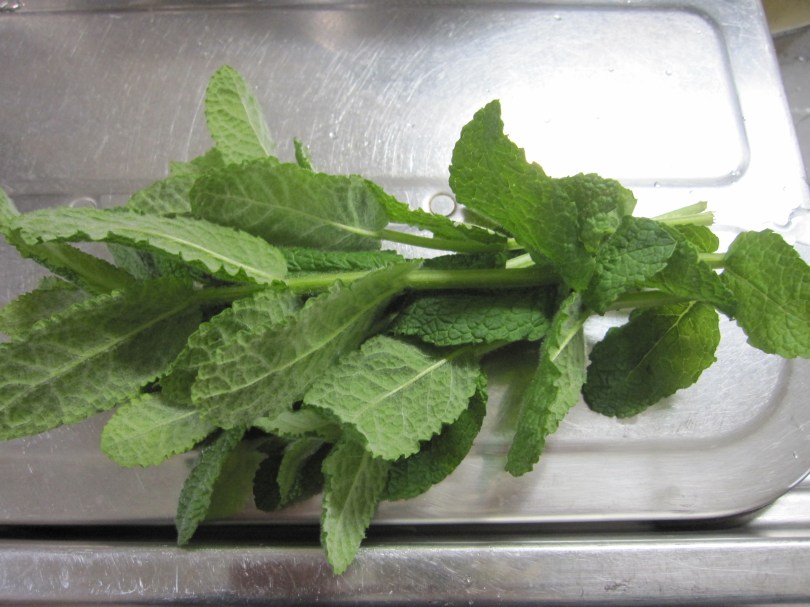 You just cut some mint, and wash it well.
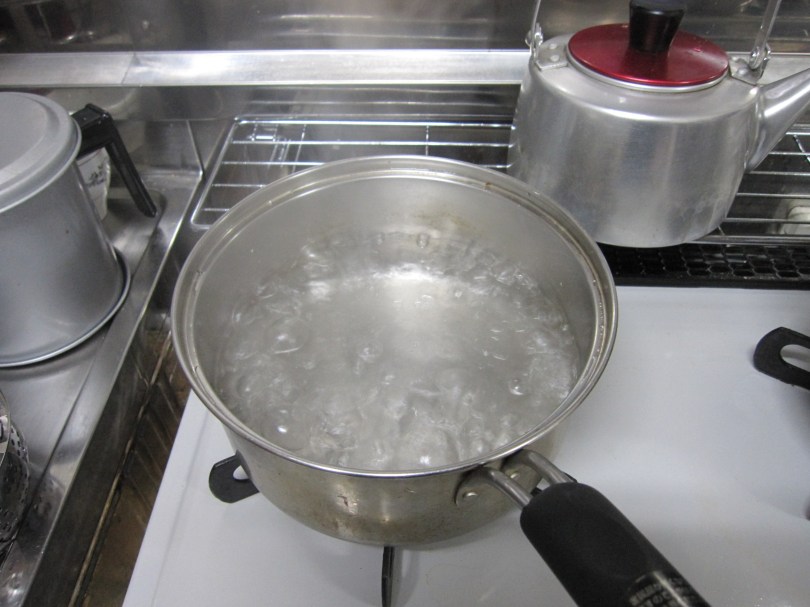
You boil water to cleanse mint just like you did it for rice straw.

Then you put the mint in boiling water for about 1 minute. With 100 degree centigrade water, most germs on the mint die except the Natto germ. This is an important step to separate Natto germ from other germs that you don’t need.
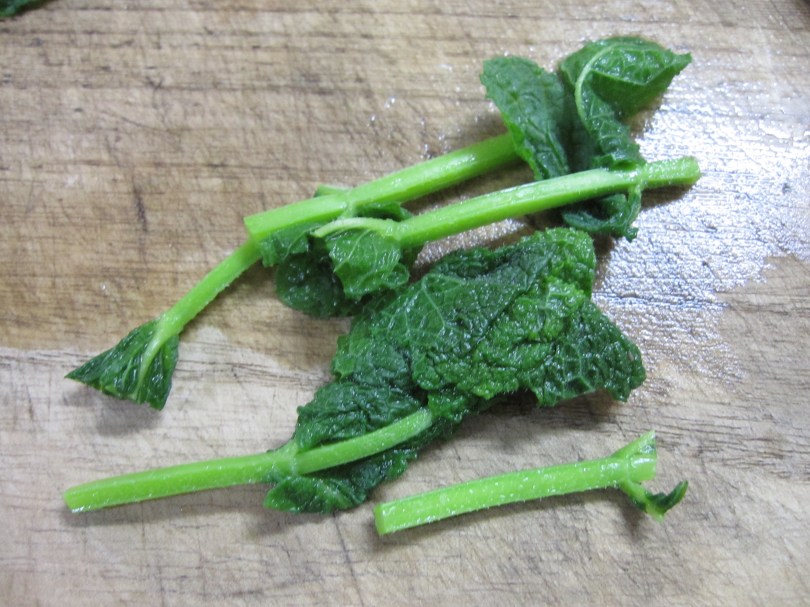
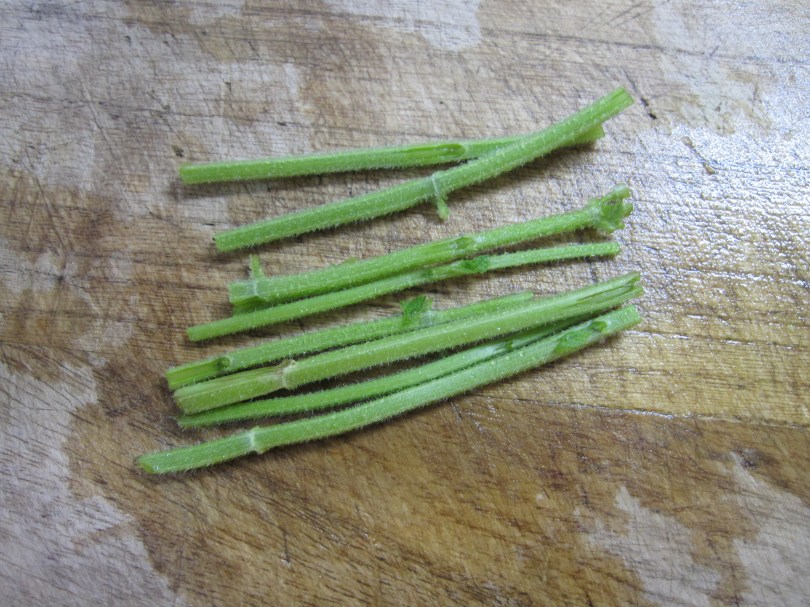
Then you want to cut the leaves,
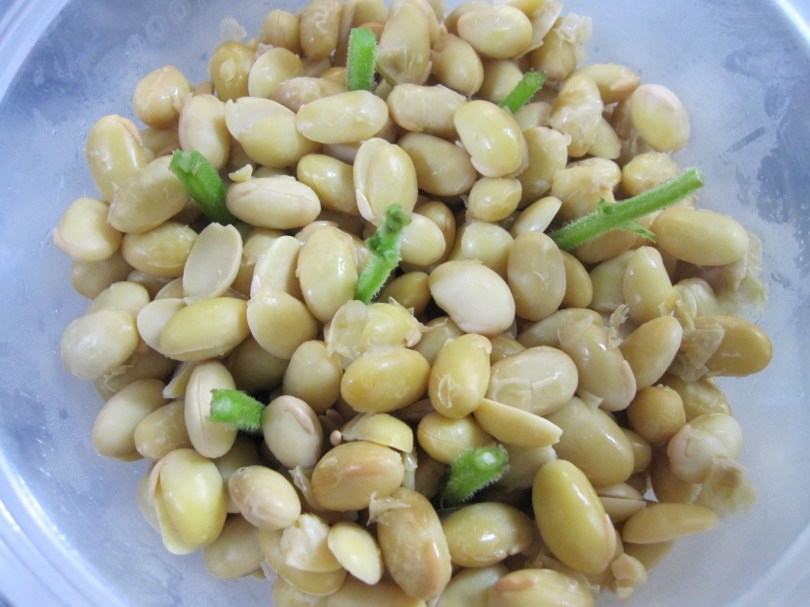
You want to stick the mint stalks into steamed soybeans, Regarding how to soak and steam soybeans, please look at How to Make Natto From Rice Straw Sticks, on my other blog, ikigaidiet.com
.
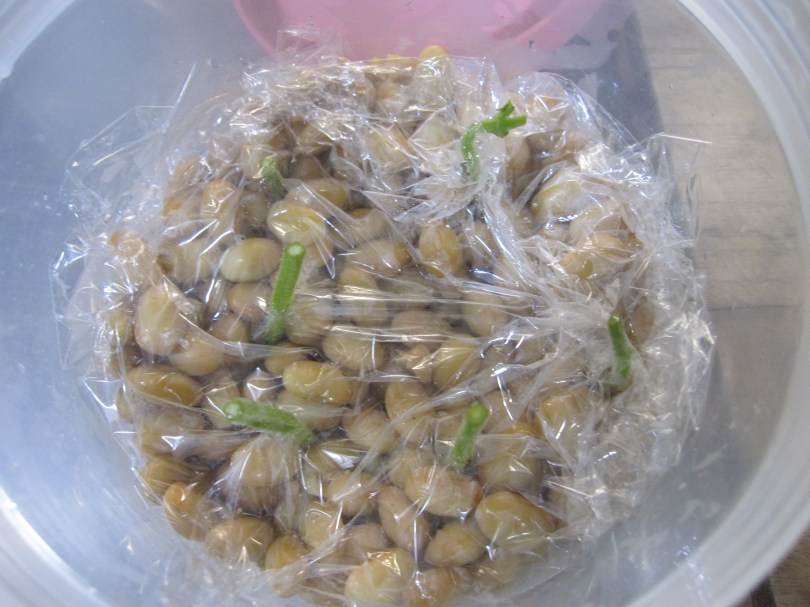
Then you want to cover the beans and mint with a cling film to keep the moisture inside. This time mint sticks don’t make holes in the cling film since they are softer than rice straw sticks, you need to make holes yourself by a pin or a fork.
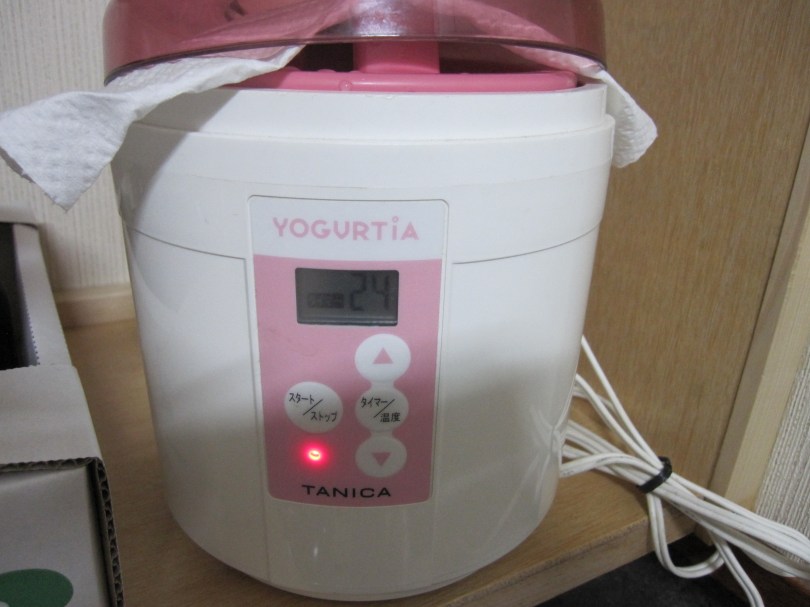
Finally, you ferment it in the yogurt maker just like you did with rice straw. Again, please refer to How to Make Natto From Rice Straw Sticks for details.
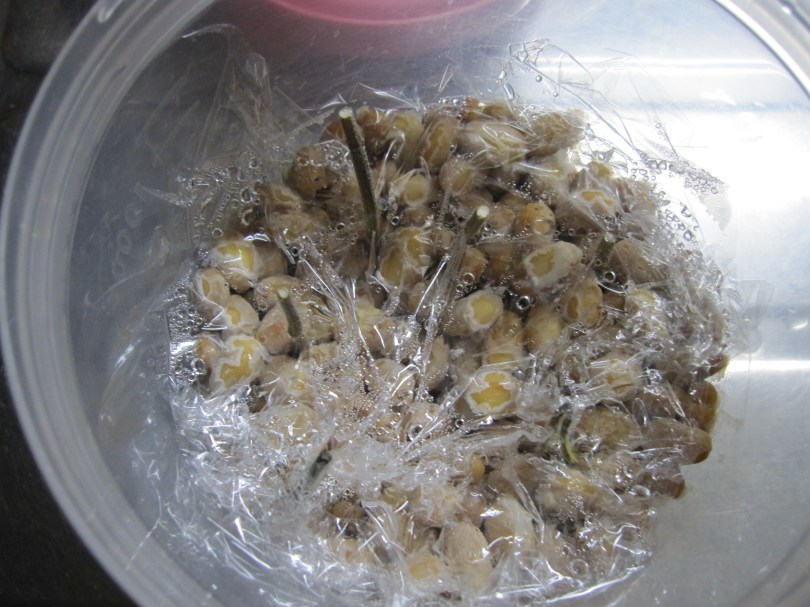
24 hours later it becomes like that.
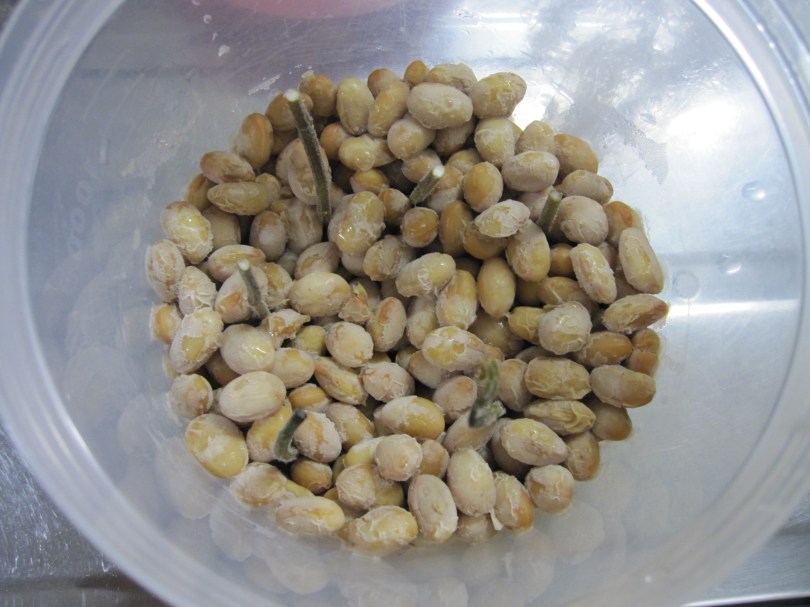
You can see that the beans turned white. It means they are fermented.

When you mix the beans, they get sticky and you know they became Natto.
That’s it. That is how to make Natto from mint. The steps are the same as making Natto from rice straw, you just replace rice straw with mint stalks.
 Omi-merchant's way of Sustainable Prosperity
Thanks for your recipe and details, i will try it.
LikeLike
I don’t want to sound unpleased. I am very appreciate for all the info you have given us about this. It brought tears to my eyes to hear that I am not the only one that failed at making natto the first fews times. I still haven’t tried again even though my situation is dire, because I have calcium deposits. I really need the vitamin K2 and the nattokinase is also great as well. Nattokinase can break down fibrin. I didn’t know the spermidine causes autophagy. I also have the hope of using water fasting, but that has to be done right. For water fasting it must be done around 7 to 10 days at the most with about 40 to 96 ounces at the least to the most that must be filtered or distilled so the electrolyte balance doesn’t get imbalanced. To heal exercise and working at all should not be done at all. Breathing and meditation is recommended. Autophagy is what we want in fasting for healing.
I want to ask what parts of what plants can be used to make natto. Can plants grown in pots be used?, Maybe potted plants should have at least some soil from the ground be used in these potted plants?, Perhaps these plants should also be on the ground that has soil?, Or can these potted plants be grown on a wooden deck?, for instance.
What ever the case I appreciate all the info you share with us.
LikeLike
Hi Kenny. Thank you for your comment. You can usually find Natto germ in dry grass such as rice straw and wheat straw. The best way is to use them if you can get hold of them. If you can’t, try using mints or other eatable plants. As for potted plants, I should think so, but I don’t know for sure since I have never tried making natto using potted plants. In order to avoid failures, it is better to use common methods. Especially, if you haven’t made one. yet. There are other factors to consider such as the temperatures and socking time to succeed. If you use unusual plants, you won’t know if the failure is due to the plant or other factors. I made a video on how to make natto from a wild plant, too.
How to Make Natto from a Wild Plant by Natto King
LikeLike
I want you to know I am going to try again in a month or three months. I will be getting an instant pot made for fermenting natto, organic soybeans and spores. As you said before in a video basically was that each time someone makes natto in the same setup, the bacilus subtilis will build up, so if the first batch and so on doesn’t work out, do not give up because the bacilus subtilis will build up making it easier to make natto. I tried finding just soybeans in supermarkets where I live, but there wasn’t any, so non-gmo and even more so organic seems out of the question locally unless I grew it myself, so I am going down a different path for now. Maybe someday all the info you have given us on Youtube, along with all the other Natto Youtubers, will pay off for me. I appriate your help. What you and so many others have done to help teach us means a lot to me and a lot of people. I will not give up. I was just taking a break.
LikeLike
I finally succeeded. I changed three things. I used organic soy beans for my first batch. I got a goid size natto fermenter. And a different natto spore starter that had four packs that make 6 cups each, which can make up to 24 cups of natto. My second batch I used those natto soy beans to make black bean natto out of. The black bean natto batch was thicker from cooking it more and stirring it a lot when adding about four ounces of the soy bean natto to it, so I added a lot of black bean broth to it to ferment.
The black bean natto turned out stinkier, but both were really great. The soy bean natto was less cooked and appeared to be slippier, however both had seemed to have an equal amount of nattokinase.
The smell from the black bean natto smelled a lot like some of the failed batches I made with rosemary and pinto beans. If I ever do that again, I would dry the rosemary, use black beans, or organic soy beans or some other bean that people say they liked like chick peas. The buildup of bacillus subtilis on the natto fermenter is nice. I clean it with only filtered water I have from our reverse osmosis and one small rag. I always air out anything wet so no mold or anything bad forms after wiping everything down that is wet.
Thank you for all the info you have given us. I can keep making natto iut of natto and keep myself informed about natto from your Youtube channel The Natto King.
LikeLike
Congratulations! I am glad to hear that you managed to make natto. Thank you for sharing your experience.
LikeLike